The Undead Archive: Inside the Communities Keeping Forgotten Fandoms on Life Support
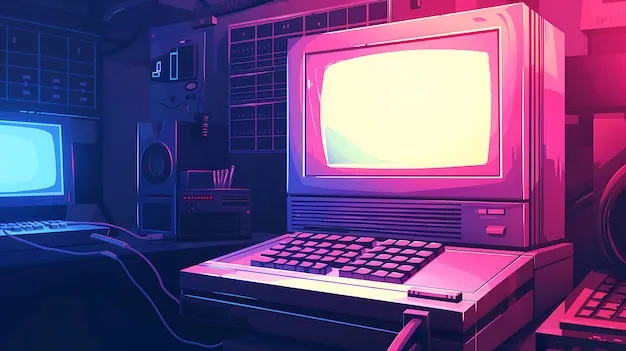
Photo: glowing computer screen in dark room with vintage video game or TV show imagery, via img.freepik.com
Somewhere on Discord right now, there's a server with 340 members dedicated entirely to a kids' animated show that aired for two seasons on a cable network that no longer exists. They're writing fan fiction, debating unresolved plot threads, and meticulously cataloging every piece of merchandise ever produced. The show hasn't aired a new episode in eleven years.
This isn't unusual. This is, in fact, one of the quieter corners of a sprawling underground ecosystem — a network of niche communities that have turned the internet's forgotten entertainment history into something living, breathing, and genuinely creative.
Welcome to the undead archive.
What Happens After the Credits Roll for the Last Time
When a show gets canceled, a game server shuts down, or a franchise quietly stops receiving updates, the mainstream narrative is simple: it's over. Move on. The algorithm will surface something new.
But for a certain kind of fan — the kind who doesn't just consume a thing but metabolizes it, builds their personality around it, finds their people through it — "it's over" is not an acceptable conclusion. It's a provocation.
These are the people who keep the lights on in the margins. They migrate from platform to platform as the internet shifts around them: Geocities fan pages to LiveJournal communities to Tumblr archives to Discord servers to private wikis hosted on servers they're paying for out of pocket. The tools change. The dedication doesn't.
"There's something almost archival about what we do," says Marcus, a 34-year-old from Portland who moderates a fan community for a defunct MMORPG that shut down its official servers in 2014. "We're not just keeping the fandom alive — we're preserving a piece of cultural history that literally no one else is preserving."
He's not wrong. Fan communities have documented, cataloged, and maintained records of games, shows, and films that their original creators long ago abandoned. In some cases, fan wikis are the only comprehensive documentation that survives.
The Discord Server as Sacred Space
If you want to understand what these communities actually feel like from the inside, you have to spend some time in them — and the first thing you notice is that they don't feel dead at all.
A Discord server for a canceled sci-fi drama from the early 2010s might have a #general channel that pops with activity every day. There's a #fan-art channel stacked with original illustrations. There's a #theories channel where people are still trying to reverse-engineer what the show's writers intended for a storyline that never got resolved. There's usually a #newcomers channel where people who just discovered the show through a streaming algorithm or a TikTok edit are welcomed in with genuine warmth.
"The community outlasted the show," explains Priya, a 26-year-old from Atlanta who helps run one such server. "At this point, the show is almost like a shared language. It's how we talk to each other. New episodes would almost be beside the point."
This is one of the more counterintuitive things about niche fandom communities: cancellation sometimes clarifies them. Without new canon to argue about, the community stabilizes around what it already has. The text becomes fixed, and the conversation deepens.
The Fan Wiki as Monument
If Discord servers are where the community lives, fan wikis are where it builds monuments.
The scale of some of these wikis is genuinely staggering. Wikis for canceled games and defunct shows sometimes run to tens of thousands of articles — character profiles, episode summaries, production histories, lists of every voice actor who appeared in a single episode. The people building these have often never been paid a dollar for the work. Some have been contributing for a decade.
"I've spent probably 400 hours on the wiki," says James, a 31-year-old from Ohio who contributes to a wiki for a video game franchise that released its last entry in 2009. "I don't think about the time. It's just something I do. It feels important to get it right."
There's something almost monastic about that dedication — the careful, unglamorous work of documentation done not for an audience but for the record itself. For the idea that this thing existed and it mattered and someone should write it down properly.
Why Do People Stay?
The obvious question — the one outsiders always ask — is why. Why invest so much in something that's over? Why not just find a new show, a new game, a new fandom that's actually active?
The answers people give vary, but a few themes keep surfacing.
For some, it's about the community itself. The fandom became the point long ago, and the original media is almost secondary — a founding mythology for a group of people who genuinely like each other.
For others, it's about the specific texture of what was lost. "There's nothing else that does what that game did," Marcus says of his defunct MMORPG. "The new stuff is fine, but it's not that. And I'm not ready to pretend it doesn't matter that we lost it."
And for some, it's something closer to stubbornness — a refusal to let corporations and algorithms decide what gets remembered. "The industry forgets things so fast," Priya says. "If we don't keep it alive, it just disappears. And I'm not okay with that."
The Static That Keeps Transmitting
At Riousfky, we're drawn to the signals that shouldn't still be broadcasting — the ones that keep transmitting long after the official channel went dark. Niche fandom communities are exactly that: a frequency that refuses to die, maintained by people who decided that some things are worth the effort of keeping alive.
They're not waiting for a revival. They're not holding out hope for a reboot (though they'll celebrate if one comes). They've built something self-sustaining in the margins — a parallel entertainment ecosystem that runs on love and stubbornness and the very human refusal to let go of the things that shaped us.
Next time an algorithm tries to bury something you loved, remember: somewhere, someone already built a server. The archive is open. The static is still transmitting.
All you have to do is tune in.