Lost in the Feed: The Entertainment the Algorithm Refuses to Show You

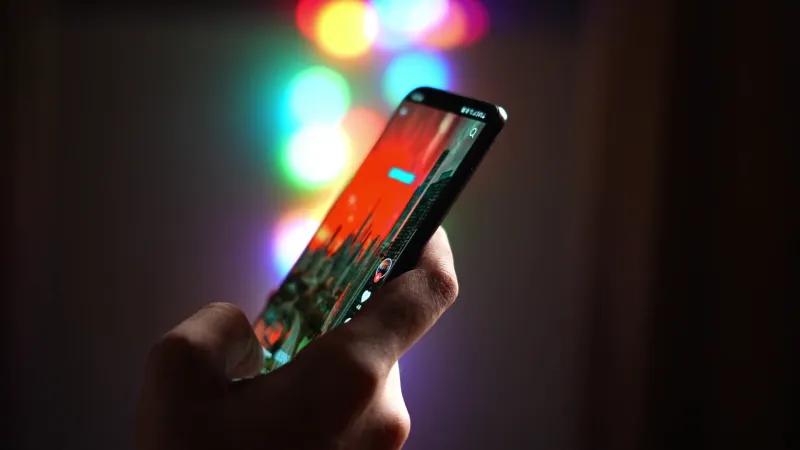
Photo: Elfi von Fliegenpilz Link to license: https://creativecommons.org/licenses/by/3.0/, CC BY 3.0, via Wikimedia Commons
There's a version of the internet where every great film finds its audience, every strange little web series earns its cult following, and every underground creator eventually gets their moment. That version doesn't exist. What we actually have is a system optimized not for discovery, but for retention — and those two goals are not the same thing.
Tune in long enough and you start to notice the static. The gaps. The titles that never seem to surface no matter how deep you dig through streaming menus. The creators who've been posting for years but hover permanently at 4,000 subscribers. The films that won festival awards in 2019 and then vanished into a licensing void. This isn't an accident. It's a feature.
How the Machine Decides What You See
Platform recommendation algorithms are, at their core, pattern-matching engines. They look at what you've watched, what similar users watched next, and what kept people on the platform longest. The logic is circular by design: content that already performs well gets recommended more, which makes it perform even better, which gets it recommended to more people. Rinse, repeat.
What that loop systematically excludes is anything that breaks the pattern. A 90-minute experimental documentary about deep-sea mining that pulls in viewers for the first 20 minutes but loses half of them by the 40-minute mark? The algorithm reads that as a failure. A short film with a nonlinear narrative structure that takes two viewings to fully land? The engagement metrics look terrible the first time around. A niche comedy series built for a hyper-specific subculture? Its audience exists — it's just too scattered for the model to cluster.
The result is what media scholars have started calling "algorithmic suppression" — not active censorship, but a kind of passive erasure. The content is technically available. It's just invisible.
The Cult Film Problem in the Streaming Age
For decades, cult films survived through physical infrastructure: video rental stores, late-night cable slots, repertory theater screenings. Clerks at Kim's Video in New York City were essentially human recommendation algorithms, pointing people toward Alejandro Jodorowsky or early John Waters based on a five-minute conversation. That infrastructure is largely gone now, and nothing digital has replaced it.
Streaming platforms do carry cult and arthouse titles — Criterion Channel being the notable exception built specifically around this kind of content — but discovery remains broken. Searching Tubi or even Amazon Prime for genuinely offbeat cinema requires you to already know what you're looking for. The serendipity is gone. And when licensing deals expire, titles just disappear without notice, sometimes never returning.
Films like Possessor, Relaxer, or The Vast of Night — all critically praised, all with devoted followings — cycle in and out of streaming availability in ways that make sustained word-of-mouth nearly impossible. You can't tell a friend to go watch something if it's gone by the time they sit down to find it.
Underground Creators and the Parallel Discovery Economy
Here's where it gets interesting. Because the mainstream platforms have essentially given up on genuine discovery, communities have started building their own systems outside of them.
Subreddits like r/flicks and r/TrueFilm operate as informal curation networks, with users posting deep recommendations that the algorithm would never surface. Discord servers built around specific film movements — mumblecore, new Romanian cinema, Japanese pink films — function as living archives and discussion spaces. Newsletter writers like the folks behind Letterboxd lists-turned-Substacks have built small but intensely loyal audiences by doing the work the platforms won't.
On the creator side, smaller YouTubers and Twitch streamers are increasingly leaning into their invisibility as a brand identity. The fact that you found them through a friend's recommendation, or stumbled onto them through a buried Reddit thread, becomes part of the mythology. "If the algorithm won't send you here, you had to find your own way" is a weirdly powerful origin story for a community.
Some of these parallel systems are remarkably sophisticated. Letterboxd has quietly become one of the most useful film discovery tools on the internet, precisely because its recommendations come from actual humans with actual taste profiles rather than engagement metrics. Mubi's curated rotation model — a new film every day, gone after 30 days — forces a kind of intentional viewing that streaming's infinite scroll actively discourages.
What Gets Lost Anyway
Even with all these workarounds, things still fall through. Independent creators who don't have the social capital to build community around their work. Films from non-English-speaking countries that never get picked up by a platform with subtitle support. Web series that lived on Vine or early YouTube and are now partially or fully gone, preserved only in fan archives if at all.
There's a real archival crisis happening in slow motion. Digital content feels permanent — it's online, it exists, surely someone has it — but the reality is that licensing disputes, platform shutdowns, and simple link rot mean that entertainment from the 2010s is already disappearing faster than VHS tapes deteriorated. At least someone thought to put those in a climate-controlled storage unit.
The Internet Archive does heroic work, but it's not built for video at scale. Fan preservation communities operate in legal gray zones. And the platforms themselves have little financial incentive to maintain content that doesn't perform.
Finding Your Own Signal
So what do you actually do with this information? The honest answer is: you put in the work, or you accept that you're watching what the algorithm selected for you and call it a day. Neither is wrong, exactly. But if you're reading this, you're probably not the kind of person who's satisfied with the default playlist.
Start with human recommendations over algorithmic ones — every time. Follow Letterboxd users whose taste aligns with yours. Find the Discord servers and subreddits and newsletters built around the specific corners of entertainment you care about. When you find something genuinely strange and good, tell people about it loudly and specifically.
The feed is not the whole picture. It's barely even a thumbnail. What's actually out there, hiding in the static — that's a different transmission entirely. You just have to know to look for it.