Static Signals: The Secret Language Hiding Inside Your For You Page
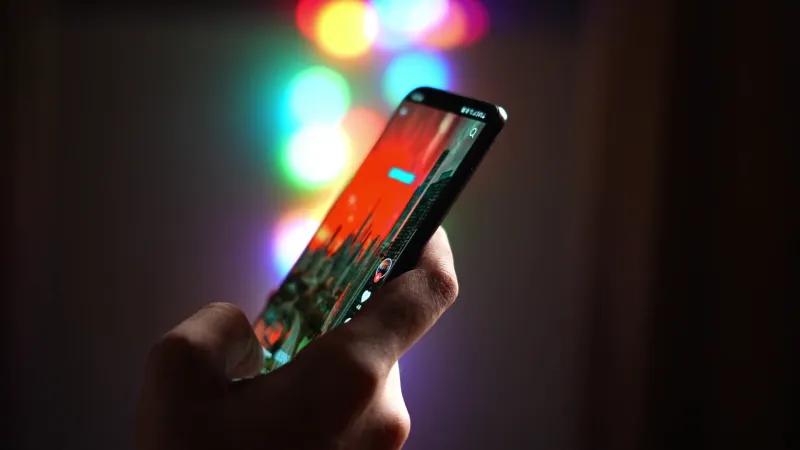
Photo: person scrolling TikTok phone screen close up with colorful light reflections, via d2j2uxe7jasn0r.cloudfront.net
The Screen Is Talking. Are You Listening?
Scroll long enough and you start to notice things. A hand positioned just so. A poster on a wall that keeps appearing in unrelated videos. A color palette that shows up across accounts that have never interacted. TikTok is a firehose of content, and most people are just trying to keep up with the current. But a growing community of viewers — call them signal hunters, Easter egg archivists, or just extremely online — believe that buried inside the chaos of viral trends is an entirely different layer of communication.
This isn't new territory for entertainment. Hidden messages have lived in album artwork, movie frames, and TV episode titles for decades. What's different now is the speed. A trend can cycle through millions of feeds in 48 hours, which means any embedded signal reaches an enormous audience before most people even realize they've seen it.
Gestures, Glances, and the Grammar of the Background
Let's start with the physical. Hand gestures have long been a shorthand in internet culture — some functional, some playful, some genuinely controversial. On TikTok, the layering gets more complex. Creators in certain fandoms have developed gesture vocabularies that function almost like a dialect. A specific finger placement during a lip sync. The way someone holds their phone at the end of a video. These aren't accidents, and the communities built around decoding them will tell you exactly why.
Background details are arguably the richer vein. Interior shots — bedrooms, kitchens, car backseats — become canvases. A book spine facing the camera. A specific figurine placed on a shelf. One creator who makes comedy content and asked to remain anonymous described it plainly: "I started putting things in the background as jokes for my regulars. Then people I'd never heard of started screenshotting them. It became its own thing."
That "own thing" is the fascinating part. Once an audience decides a background detail is meaningful, it essentially becomes meaningful. The creator's original intent becomes secondary to the interpretation machine.
Intent vs. Accident: The Creator's Side of the Signal
Here's where it gets genuinely interesting. When you talk to creators about the codes their audiences obsess over, the responses split pretty cleanly into two camps.
The first camp is intentional. These creators are architects. They plant details deliberately, reward loyal viewers with continuity, and sometimes use subtle references to communicate things they can't say directly — whether that's something personal, something political, or just an inside joke scaled to thousands of people. One creator in the DIY space described building a "visual timeline" across her videos that only makes sense if you've watched everything in order. "It's not a secret," she said. "It's more like a loyalty test."
The second camp is the accidental encoder, and they're arguably more interesting. These are creators who post naturally, without premeditation, and then watch as their audience reverse-engineers meaning from choices they didn't consciously make. The color of a shirt. The song playing faintly in the background. A phrase used twice across videos six months apart. The audience builds the code retroactively, and sometimes the creator leans into it — not because it was ever real, but because the mythology becomes part of their brand.
The Psychology of Finding the Signal
Why do we do this? Why does a significant portion of the internet spend genuine time and energy hunting for hidden meaning in 30-second videos?
Part of it is pattern recognition — the same cognitive function that helped our ancestors identify predators in the underbrush is now scanning TikTok grids for visual consistency. We are meaning-making machines, and we don't turn that off because the input is entertainment.
But there's also a social dimension. Cracking a code — or believing you have — creates instant community. The comment section becomes a war room. Theories get refined, challenged, and built upon. Discovering a "hidden" detail in a video and posting about it before anyone else is a form of social currency. You're not just a viewer anymore. You're a decoder.
This dynamic is something platforms understand and, to varying degrees, quietly encourage. Engagement metrics don't distinguish between someone watching a video to enjoy it and someone watching it twelve times looking for a hidden message. Both count.
Conspiracy Adjacent, But Make It Fun
It would be dishonest not to acknowledge where this can go sideways. The same interpretive energy that makes fandom theories fun can, under certain conditions, curdle into something less harmless. Creators — particularly women and creators of color — have found themselves on the receiving end of "decoding" that crosses into harassment, where audiences convince themselves that background details are confessions or coded cries for help.
The line between a fun Easter egg hunt and an invasive surveillance of someone's personal space is real, and the internet doesn't always respect it. Most signal hunters are genuinely just in it for the game. But the game has terms and conditions that don't always get read.
Tune In
What makes this whole phenomenon so distinctly now is that the relationship between creator and audience has collapsed the distance that used to exist in entertainment. A filmmaker hides an Easter egg in a movie, and fans find it years later in a DVD commentary deep dive. A TikTok creator posts at 11pm and by morning there are forty-seven comment threads picking apart the third second of the video.
The signal is always in the static. Whether it was put there on purpose, whether it means what you think it means, whether the creator even knows you're listening — none of that changes the fact that you're listening. And in 2024, that attention itself is the message.