Broken on Purpose: Why Corrupted Files and Glitchy Media Hit Different Than Anything Polished
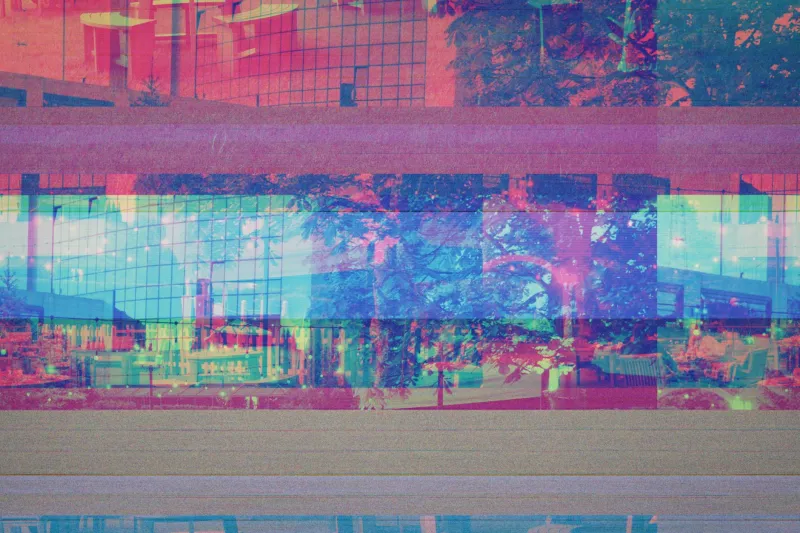
You've probably felt it before without having a word for it. A video file stutters. The audio cuts out for half a second. The colors smear sideways in a way they absolutely shouldn't. And instead of closing the tab, you lean in.
There's a specific texture to broken media — corrupted downloads, compression ghosts, leaked footage that was never meant to leave a hard drive — that polished, algorithm-optimized content just doesn't have. It's the digital equivalent of finding a Polaroid with water damage. The damage is part of the message now.
The Glitch as an Emotional Frequency
Corruption implies something happened. A file that's degraded has a history — it was copied too many times, lived on a failing drive, survived some kind of transit. That backstory is baked into the artifact itself, even if you can't consciously read it. You feel it anyway.
When you watch a pristine 4K stream of anything, the production process has been almost entirely erased. The seams are invisible. The lighting is correct. The audio is mixed to broadcast standards. It's impressive, genuinely, but it's also weirdly weightless. There's nothing to grab onto. The thing exists in a kind of frictionless vacuum.
Broken media has friction. The compression artifact in the corner of the frame, the audio dropout that makes a sentence disappear mid-word — these are reminders that the content exists in the physical world, on actual hardware, moving through actual networks. It's a signal with static, and the static proves the signal is real.
Rough Cuts and the Intimacy of Incompleteness
Leaked rough cuts have developed their own weird cult following online. Not because people want to pirate content — though sure, that happens — but because rough cuts feel like accidentally walking in on something private. The temp music is still in there. The color grade is flat and greenish. A director's temp note is burned into the frame.
That incompleteness reads as intimacy. You're seeing the thing before it was made safe for you. Before the notes came in, before the marketing team signed off, before someone decided exactly how you were supposed to feel at every moment. The rough cut is honest in a way the release version can't afford to be.
This is why behind-the-scenes footage, bloopers, and raw interview footage have always pulled audiences in. But the internet has turbocharged that appetite into something stranger. Now people actively seek out degraded versions of things they've already seen in high definition. The lo-fi version of the song. The potato-quality bootleg of the concert. The VHS rip of the movie that's been available in Blu-ray for a decade.
Intentional Decay: When Creators Break Their Own Work
Here's where it gets interesting. Creators have caught on.
A growing number of musicians, filmmakers, and online video makers are deliberately introducing glitch aesthetics, compression artifacts, and analog degradation into content that was produced on perfectly functional modern equipment. The imperfection is engineered. The decay is fake.
And it works anyway.
There's a whole production pipeline now dedicated to making things look like they were retrieved from a corrupted hard drive. VHS overlays. Datamosh effects that smear motion in that specific, unsettling way. Audio processed to sound like it's coming through a broken FM signal. The tools are sophisticated. The output looks like something that barely survived.
The interesting question isn't whether this is authentic — it obviously isn't, in a literal sense. The interesting question is why audiences accept it emotionally as authentic even when they know it's constructed. And the answer might be that authenticity, at this point, isn't about origin. It's about feel.
Polished content signals that someone has control over your experience. Broken content, real or simulated, signals that the control has slipped a little. That slippage is where the feeling gets in.
Algorithmic Perfection and the Rebellion of the Artifact
Spend enough time on any major platform and you start to recognize the grammar of content optimized to perform. The hook in the first three seconds. The pacing calibrated to retention graphs. The thumbnail that's been A/B tested into something that technically works but feels like it was designed by a machine — because it kind of was.
Against that backdrop, anything that looks wrong becomes a signal. Not just aesthetically interesting — politically interesting. A creator who introduces distortion is, consciously or not, opting out of the optimization arms race. The glitch says: I'm not playing by the rules of the feed.
Audiences read that. Maybe not explicitly, but somewhere underneath the experience, they register that the broken thing didn't come through the usual pipeline. It feels like it arrived differently. Like it found another way in.
This is part of why the hypnagogic pop and vaporwave aesthetics of the early 2010s had such staying power, and why they keep cycling back in new forms. The degraded mall music, the corrupted Windows 95 aesthetic, the footage that looks like it was recorded on a camera bought at a garage sale — all of it is reaching for the same thing. A texture that the current moment, with its algorithmic smoothness, can't produce by default.
What We're Actually Looking For
There's a theory in psychology called the pratfall effect — the idea that a competent person becomes more likable after making a small mistake. The imperfection humanizes them. Something similar might be happening with media.
When a video file is broken, it's not performing for you. It's just broken. And that absence of performance, that refusal to be seamless, feels like honesty. Like the thing is showing you something it didn't mean to. Like you caught it off guard.
In a media environment where almost everything has been optimized, packaged, and pre-tested for emotional impact, the corrupted file is the one thing that hasn't been. Or at least feels like it hasn't.
Maybe that's enough. Maybe the feeling is the whole point.
Tune into the static long enough and you start to wonder if the static is the signal. If the broken version is the real version. If everything else has just been too clean to trust.