You Watched It. Maybe. The Weird Science of Shows You Remember Finishing But Never Did

There's a specific kind of weird that hits when someone brings up a show at a party and you jump in — you have opinions, you remember a character arc, you can describe a scene — and then later, alone, you open your streaming app and discover you stopped watching three episodes in. Two years ago. And never went back.
You didn't finish it. But somehow, you remember finishing it.
This isn't a you problem. Or rather, it's a you problem that's happening to basically everyone, quietly, in the background of a culture that now produces more watchable content than any human brain was ever designed to process.
The Blur Is the Point
Here's what streaming did that nobody really warned us about: it collapsed the experience of watching something and the experience of knowing about something into the same fuzzy category.
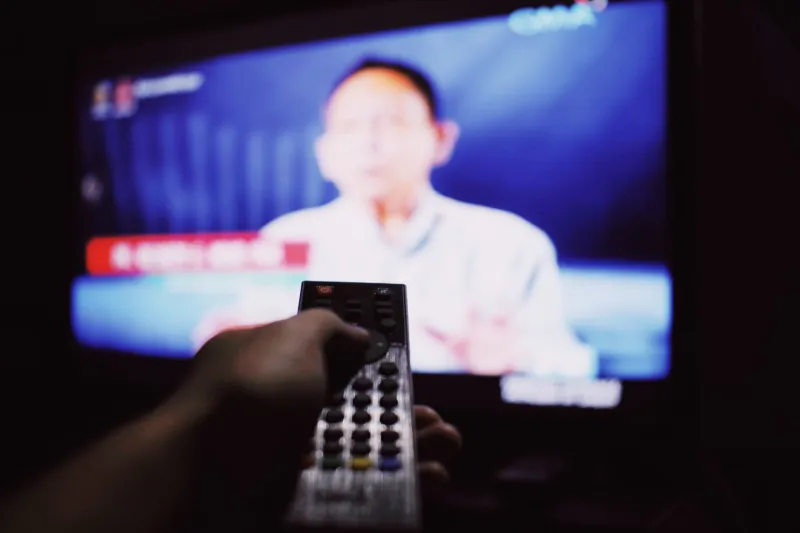
Before, there was a clear ritual. You watched TV at a scheduled time. You either caught it or you didn't. The memory had a timestamp, a location, maybe a specific couch. Now, you're watching a show on your phone while eating lunch, half-reading a recap on Reddit, seeing the discourse on Twitter, catching a clip on TikTok, and hearing your coworker explain the finale — all within the same week. Your brain doesn't file those as separate events. It files them as experience.
Psychologists have a term for what can happen next: source monitoring errors. Your memory stores the content — the plot, the characters, the emotional beats — but loses track of where that content came from. Watched it, read about it, heard about it, dreamed about it — it all lands in the same mental drawer labeled "things I know."
Streaming culture didn't invent false memory. But it built the perfect machine for manufacturing it at scale.
The Algorithm Remembers For You
There's another layer to this, and it's a little more unsettling.
Netflix, Hulu, Max — they all track your watch history with a specificity your own memory can't match. They know you hit play on that prestige drama at 11:47 PM on a Tuesday, watched 22 minutes, and never came back. But your recommendation feed? It keeps serving you content as if you finished it. Related shows. "Because you watched..." suggestions. The algorithm treats your partial view as a completed experience, and over time, so do you.
The feed becomes a kind of external memory that doesn't always tell the truth. It reflects back a version of your viewing history that's been quietly smoothed over, and you absorb that reflection. You start to believe you're the kind of person who watches a certain type of show — because the algorithm keeps insisting you are.
Identity gets built in the gap between what you actually watched and what your recommendations say you watched. And those two things are not always the same.
Cultural Osmosis Is Real and It's Doing Work
Let's be honest about something: you can have a fully formed opinion about a show you never watched a single frame of.
This isn't new — people have been faking it about books forever. But entertainment culture has industrialized the process. A prestige show drops, and within 72 hours there are explainer threads, reaction videos, meme formats, podcast episodes, and think pieces. The discourse becomes its own complete narrative. You can consume the discourse and walk away with memories that feel indistinguishable from memories of the actual show.
This is what researchers sometimes call false media nostalgia — a warm, specific feeling of having experienced something that you only ever experienced secondhand. It's not lying, exactly. It's more like your brain accepted a copy as the original, filed it, and moved on.
And here's the thing: the copy is often better than the original. The discourse strips out the boring parts. The memes highlight only the iconic moments. The recap gives you the emotional payoff without the three slow episodes in the middle. Of course your brain prefers the compressed version. Of course it feels more real.
What It Says About Who We Think We Are
This gets a little existential if you sit with it.
A lot of us build identity around what we consume. The shows we love, the movies that wrecked us, the creators we followed through their whole arc — these feel like evidence of who we are. "I'm the kind of person who watched The Wire all the way through" carries weight. It says something, or it feels like it does.
But if half of that mental catalog is made up — if you think you finished something you didn't, if you remember a scene that was actually just a GIF you scrolled past — then what does your entertainment identity actually represent?
Maybe it represents something more honest than we give it credit for. Maybe the shows we claim to have watched, the ones we absorbed through culture without ever hitting play, are actually more revealing than the ones we sat through. You chose to follow the discourse. You chose to let it matter to you. That's a real decision, even if the viewing hours aren't real.
Or maybe the whole thing is just a little broken and we should stop using our streaming history as a personality.
Tuning Into the Static
There's something almost poetic about the way this works. We're all walking around with these patchwork media memories — part actual experience, part algorithm reflection, part cultural noise we absorbed without realizing it. The signal and the static have gotten completely mixed up, and most of us can't tell the difference anymore.
And streaming platforms have exactly zero incentive to fix this. Blurred memory means you'll rewatch things. Misremembered finales mean you'll start over. The confusion is profitable.
The next time you find yourself confidently explaining a show's ending, it might be worth pausing for just a second. Did you watch it? Did you read about it? Did the algorithm decide you watched it and you just went along?
Does it matter?
Maybe not. But it's worth knowing the difference — even if, at this point, you genuinely can't.